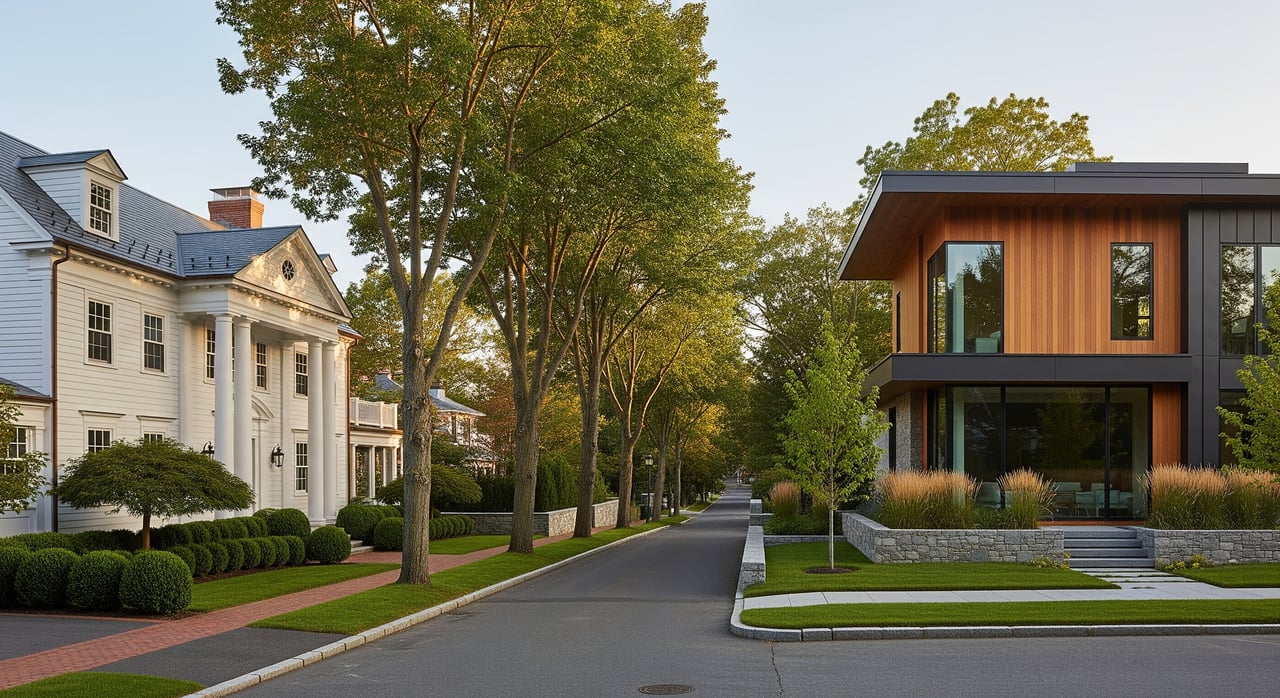
Torn between a classic Colonial and a sleek Contemporary in the Metro-West? You are not alone. Style shapes how you live day to day, how much you spend on upkeep, and how your home performs at resale. In this guide, you will learn what each style offers, what to inspect, and how to match your priorities to the right home in Wellesley and nearby Boston metro communities. Let’s dive in.
Why style matters in the Metro-West
Let's dive deeper and take the town of Wellesley, for example. Wellesley’s market is shaped by a few local drivers. Families often focus on attendance zones and school access through the Wellesley Public Schools, which influences demand for larger, traditional layouts. Many buyers also balance space with commute options like the MBTA Commuter Rail and major routes, so location can trump square footage.
Lot sizes and zoning guide what is available. The Town of Wellesley Planning and Zoning resources explain how setbacks and districts affect additions or rebuilds. Neighborhood character also plays a role. Historic streets with mature trees lean traditional, while some larger lots feature mid-century or later contemporaries.
Colonial vs. Contemporary at a glance
- Colonial: Traditional curb appeal, separate rooms, bedrooms upstairs, strong family-friendly function. Many have updated kitchens that open to dining or family rooms.
- Contemporary: Open plans, large windows, and indoor-outdoor flow. Layouts can be single level or split level with emphasis on light and modern finishes.
- Buying lens: Think about daily living, privacy, natural light, system age, and how easily the home adapts to your needs over time.
Colonial homes in the Metro-West
Layout and living
Colonials typically offer a center-hall plan with formal living and dining rooms, a separate kitchen, and bedrooms on the second floor. You often get attic and basement storage. Many buyers appreciate the separation between public and private spaces, especially with school-age kids.
What to inspect
Older Colonials are charming, but systems matter. Focus on:
- Attic insulation and ventilation, and any outdated wiring such as knob-and-tube
- Chimney condition, roof sheathing, and flashing at roof intersections
- Original single-pane windows for energy loss and possible rot
- Foundation settling and basement moisture
- Lead considerations in pre-1978 homes. Review the CDC lead paint guidance if you plan to renovate
Resale in the Metro-West
Resale for Colonials is strong. Buyers value classic curb appeal and familiar floor plans. Updated kitchens, baths, and modern mechanicals often command a premium, while unrenovated homes may lag renovated comparables.
Contemporary homes in the Metro-West
Layout and living
Contemporaries favor open spaces, oversized windows, and simple circulation. You get strong connection to natural light and the outdoors, with single-level or split-level designs that can work well for flexible living and work-from-home setups.
What to inspect
Design details are part of the appeal, but they also require attention:
- Flat or low-slope roof membranes, drainage, and flashing
- Large glazing for seal integrity, frame condition, and energy performance
- Nonstandard finishes or systems that may be more specialized to repair
- Mechanical systems such as radiant heat or unique HVAC components for serviceability
Resale in the Metro-West
Contemporaries attract buyers who prioritize modern design. They can sell at a premium when condition, finishes, and location align with transit and schools. Because they appeal to a more specific segment, market response depends heavily on perceived livability and quality.
Where Capes and new builds fit
Capes
Capes are common in the metro-west mid-century neighborhoods. The compact footprint delivers efficient heating and easy main-level living, with additional rooms tucked into dormers. Watch roof-to-wall intersections and attic ventilation. Well-planned additions or dormer expansions can boost space and value if zoning allows.
New construction
New builds provide modern layouts, multiple en-suite bedrooms, home offices, and energy-efficient systems. They reduce near-term maintenance and often include builder warranties. Confirm permits, certificate of occupancy, and drainage or grading to avoid water issues. Location and neighborhood fit influence long-term value.
Costs and lifespan planning
When comparing homes, budget for system ages and upcoming replacements. Typical ranges include:
- Asphalt shingle roof: about 20 to 30 years
- Architectural shingles or metal: 30 to 50 years
- Boiler or furnace: 15 to 25 years
- Central AC: 15 to 20 years
- Water heater: 8 to 15 years for tank, 15 to 20 plus for tankless
- Double-pane windows: 15 to 30 years depending on seals and frames
- Siding: vinyl 20 to 40 years; wood clapboard needs repainting roughly every 5 to 10 years
- Septic systems where applicable: about 20 to 40 years
- Kitchens and baths: aesthetic half-life around 10 to 20 years for market preference
Daily living tradeoffs
- Space and privacy: Colonials provide formal separation that works well for homework, guests, and quiet time. Contemporaries offer openness that suits entertaining and casual living, with less built-in privacy.
- Light and outdoor connection: Contemporaries maximize daylight and sightlines. Colonials and Capes may need renovations like wall openings or skylights to brighten interiors.
- Maintenance: Older Colonials and Capes often require staged upgrades to mechanicals, roofs, and windows. Contemporaries may need specialized roof or glazing work. New builds cut near-term maintenance but can carry higher long-term operating costs due to size.
- Accessibility: Capes and some single-level contemporaries are easier for aging in place. Colonials usually need planning for a main-level bedroom and bath if long-term accessibility is important.
A simple decision framework
Ask yourself:
- Lifestyle fit: Do you want formal rooms and defined zones, or do you prefer wide-open spaces and glass?
- Update appetite: Would you rather renovate an older home or pay a premium for move-in ready?
- Commute and school needs: How close do you want to be to rail or specific attendance zones? Check the MBTA Commuter Rail and the Wellesley Public Schools resources, from using our earlier example, as you compare properties.
- Expansion potential: If you plan to add space, review lot size and local rules with the Town of Wellesley Planning and Zoning. The town’s assessor resources can also help you understand lots and taxes.
Smart inspection game plan in the Metro-West
Use this checklist regardless of style, then add style-specific items:
- Full home inspection for structure, roof, drainage, and moisture
- HVAC or boiler assessment and age verification for major systems
- Chimney evaluation and pest inspection where appropriate
- Septic inspection if the home is not on town sewer
- Lead and asbestos checks for pre-1978 properties, especially if you plan to renovate. See the CDC lead paint guidance
The bottom line
A Colonial delivers classic function with broad resale demand. A Contemporary offers light, flow, and modern design that can shine when condition and location align. Capes and new builds round out the mix by offering efficient footprints or turnkey living. The right choice matches your daily routines, budget for updates, and long-term goals in the Metro-West area.
If you want a clear plan from search through closing, including coordination with inspectors, lenders, and counsel, connect with Laura Wurster. You will get calm, legally informed guidance and a process designed to protect your outcome.
FAQs
What should a family prioritize when choosing Colonial vs Contemporary?
- Focus on commute, school access, and floor plan function. Colonials often suit multiple bedrooms and separation, while contemporaries offer open flow and light.
Do contemporary homes in hurt resale compared to Colonials?
- Not necessarily. Strong design, quality systems, and a good location can command premiums. Traditional styles have broader appeal, so buyer pool can differ.
Are new builds worth the premium in the Metro-West?
- They offer modern layouts and lower near-term maintenance. Weigh price and taxes against energy performance, space, and neighborhood fit.
What inspections are essential for older Metro-West homes?
- Structural and roof review, HVAC or boiler assessment, chimney and moisture checks, plus lead and asbestos evaluations for pre-1978 properties.
How do I verify if I can add on to a home?
- Review lot size, setbacks, and zoning with the Planning and Zoning Board of the town. As our earlier example, here is Town of Wellesley Planning and Zoning. Confirm past permits and consult inspectors early.