Wondering what kind of house you’ll actually find in Wellesley once you start touring? That question comes up quickly, because this is a town where architecture tells a big part of the story. If you want to understand how Wellesley homes look, live, and evolve over time, this guide will help you spot the signature styles and think through what they may mean for your next move. Let’s dive in.
Why Wellesley’s Housing Feels Distinct
Wellesley’s development was shaped by commuter access, including road, rail, and trolley connections, and that history still shows up in the housing stock today. The town grew across the late 19th through late 20th centuries, creating neighborhoods with different identities tied to village centers, commuter rail stations, subdivision patterns, and other local landmarks.
Wellesley is also still overwhelmingly a single-family home community. The town’s June 2025 draft Strategic Housing Plan lists 7,315 single-family parcels, compared with 666 condominiums and much smaller numbers of two-family, three-family, and larger multifamily properties. That means many buyers begin their search with detached homes, even as attached options continue to grow.
Another important point is that Wellesley is not a blank-slate market. Many of the newer homes you see are replacement homes built after teardown or major redevelopment, not brand-new homes on previously vacant land. From 2003 to 2025, more than 1,200 single-family homes were built, yet the net increase in the single-family stock was only 95 homes.
Colonial Homes Define Wellesley
If one home style stands out as the default Wellesley house, it is the Colonial. According to FY2024 assessor data cited in the 2025 draft housing plan, 57% of Wellesley’s single-family homes are Colonial. That makes it the most common style by a wide margin.
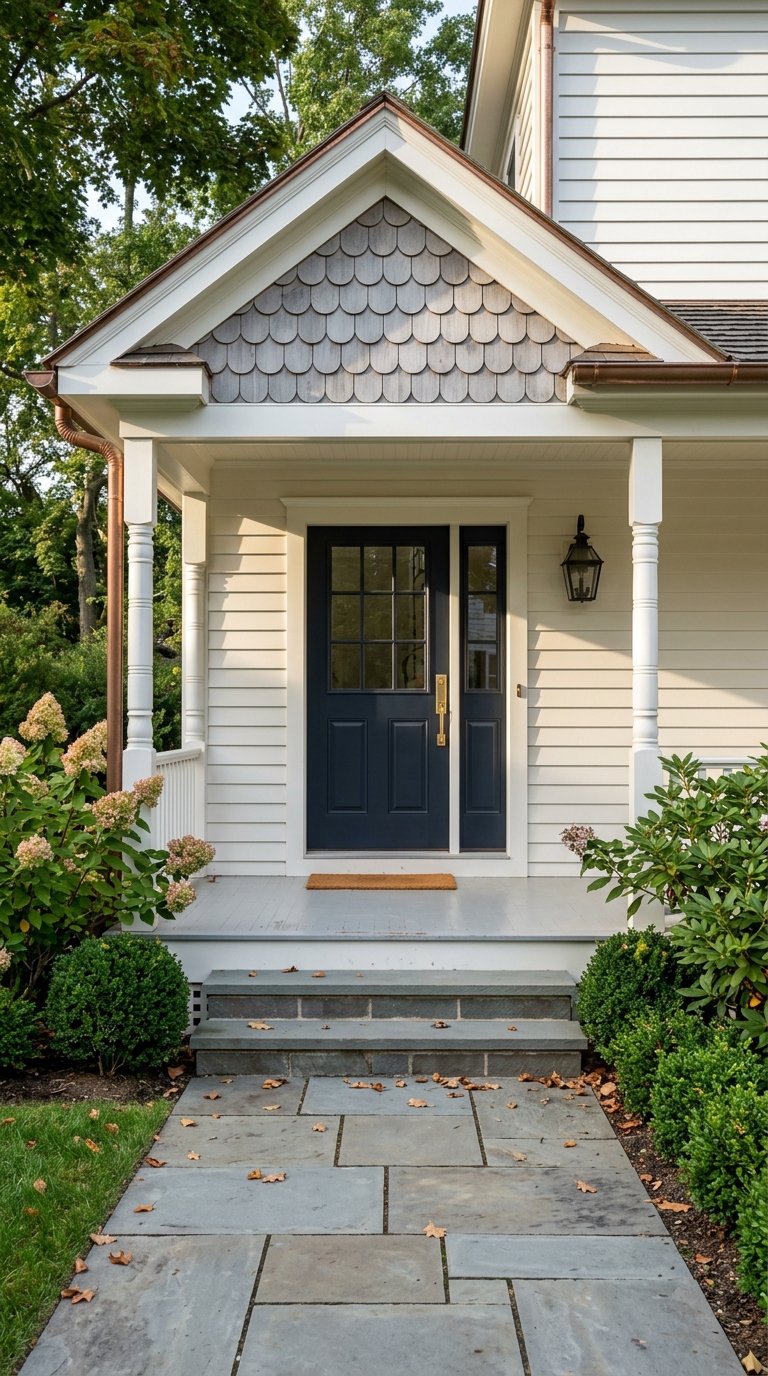
In practical terms, Colonials tend to feel familiar and flexible. Colonial Revival homes are often symmetrical, with a centered front entry, evenly placed windows, multi-pane sash windows, and classical details around the door. Some later versions are simpler and may blend colonial features rather than strictly copying one historic model.
For buyers, this matters because Colonials show up across a wide range of sizes and price points. You may see older, more traditional layouts in one home and a heavily expanded or rebuilt version in another. In Wellesley, “Colonial” often describes both a historic architectural language and a living format that has adapted over time.
Cape Cod Homes Offer a Smaller Footprint
Cape Cod homes are another signature part of the Wellesley housing mix. The draft housing plan says 11% of single-family homes in town are Capes, and the style appears much more often in the lower-value quartile than in the upper quartile.
Classic Cape Cod houses are usually modest one-and-one-half-story homes with steep gable roofs, minimal roof overhangs, and simple facades. Many have a central chimney and a compact footprint that feels efficient rather than sprawling. In Wellesley, these homes often appeal to buyers who want a smaller house or who see long-term renovation potential.
You will also notice that many Capes have changed over time. Dormers, rear additions, and expanded living areas are common ways owners have added usable space while keeping the original house as a starting point. If you are comparing styles, the Cape often represents the classic smaller-scale option in town.
Victorian-Era Homes Bring Character
If your eye is drawn to decorative trim, asymmetry, and visual detail, Wellesley’s Victorian-era homes may be the houses you remember most. Historic survey material for Wellesley notes that large architect-designed Queen Anne, Colonial Revival, and Arts and Crafts or Tudor homes were built in parts of Wellesley Hills, while smaller Victorian Gothic houses and cottages appear in other areas including around Bird Hill Avenue, Longfellow Road, and Route 9.
Queen Anne homes are known for irregular shapes, projecting bays, porches, decorative shingles, and, in some cases, towers or other prominent features. These are often the homes with the most obvious personality from the street. They can feel special and one-of-a-kind in a way that more standardized house forms may not.
That said, character often comes with complexity. Victorian-era homes may have more intricate exterior details and older elements that can require closer upkeep. If you love craftsmanship and architectural variety, these homes can be compelling, but it helps to evaluate condition and maintenance history carefully.
Newer Homes Blend Tradition and Modern Living
Many buyers in Wellesley want updated layouts, larger kitchens, and attached garages without giving up the town’s traditional visual character. That helps explain why so much newer construction in town draws from historic shingle-style forms and detailing while still reading as contemporary.
Wellesley’s design guidelines note that new construction should be contemporary in design, compatible with nearby historic buildings, and clearly distinguishable from older homes. In day-to-day terms, that often means newer houses that echo familiar New England massing and materials while offering more open circulation, larger primary suites, and garage configurations that support modern living.
Because Wellesley is largely built out, many of these homes are rebuilds rather than new houses in entirely new areas. For buyers, the choice is often less about whether a home is “new” and more about whether you prefer an older house with original character, a substantially rebuilt larger home, or something in between.
Condos and Townhomes Fill an Important Niche
Although single-family homes dominate the market, attached housing plays a meaningful role in Wellesley’s housing mix. The town’s zoning includes Town House Districts, and local planning documents place townhouses, apartments, and condos in commercial villages, office-park areas, arterial-road locations, and redevelopment sites.
Wellesley also has three MBTA commuter rail stops, and the town’s compliance planning for commuter rail community housing focuses on areas within a half mile of those stations. That context helps explain why condos and townhomes are part of the housing conversation here, especially for buyers seeking lower-maintenance living or proximity to village centers and transit.
The numbers show that this segment has grown. From 2003 to 2025, condominium parcels increased by 320, while two-family and three-family properties declined by 65. So if you are not looking for a detached house, Wellesley still offers options that fit a different lifestyle and ownership structure.
How Style Connects to Lifestyle
In Wellesley, home style often overlaps with how you want to live. Colonials usually offer the broadest range of choices and often feel like the town’s default home. Capes tend to signal a simpler, smaller house, while Victorian-era homes often appeal to buyers who prioritize architectural detail and individuality.
Newer rebuilds and contemporary homes usually attract buyers who want larger rooms, more open layouts, and features that support current routines. Condos and townhomes may appeal if you want less exterior maintenance or a different price point and footprint than a detached single-family home.
The town’s housing plan also shows a clear split by age and scale. Lower-quartile single-family homes tend to be older and smaller, while upper-quartile homes are newer and much larger. That makes style more than a visual preference. It often shapes renovation plans, long-term costs, and how well a house fits your daily life.
What Buyers Should Look For
If you are house hunting in Wellesley, it helps to look past style names and focus on how each home actually functions for you. Two houses labeled “Colonial” can live very differently depending on age, updates, and additions.
A few smart questions can help you compare properties:
- How much of the home is original versus expanded or rebuilt?
- Does the floor plan reflect the era when the house was built?
- Are there features, like dormers or additions, that changed the usable space?
- Does the lot support future plans if you hope to renovate later?
- Are you choosing between character, size, condition, or convenience?
This is where local context matters. In a town with many older homes and a strong pattern of teardown and rebuild activity, understanding the house behind the listing photos can make a real difference.
What Sellers Should Keep in Mind
If you are preparing to sell, your home’s style is part of its story, but buyers will also be measuring livability, condition, and future flexibility. A Cape may attract attention for charm and manageable scale. A Colonial may appeal for familiarity and broad market recognition. A newer rebuild may stand out for layout and finishes.
The key is to position the property honestly and clearly. Buyers in Wellesley are often comparing not just your home to similar homes, but also your home to very different housing types that solve the same need in different ways.
That is why thoughtful pricing, presentation, and process management matter. In a nuanced market, buyers respond best when they understand where a home fits within the broader Wellesley style mix and what makes it a strong option.
Renovation and Demolition Rules Matter
If you are buying a home with plans to renovate, expand, or rebuild, it is important to understand that Wellesley has local review rules that may affect your timeline and options. Exterior changes within a local historic district require a certificate from the Historic District Commission, while interior changes are not reviewed by that commission.
The town also has a demolition-review bylaw focused on historic preservation. In addition, larger single-family projects may trigger Large House Review before a permit is issued.
Wellesley’s current local historic districts include Cottage Street, Methodist Meeting House, Tufts House, Sylvia Plath House, Fiske House, and Stanwood House. If a property has historic or regulatory significance, doing your homework early can help you plan with more confidence.
Researching a Wellesley Home’s Past
Sometimes the most helpful information about a house is not obvious during a showing. If you want to know when a home was built, how it changed, or what may already be documented about it, local research can add useful context.
The Wellesley Historical Society points homeowners and researchers to photo archives, atlases, town directories, assessor records, and Wellesley Historic Commission inventory forms. The society says volunteers documented the history of 400 homes and historic areas with the Massachusetts Historical Commission.
For buyers, that kind of research can deepen your understanding of a property before you make major decisions. For sellers, it can help you tell a more complete and credible story about your home.
If you are sorting through Wellesley’s mix of Colonials, Capes, character homes, rebuilds, and attached options, having a local advisor can make the search or sale feel much more manageable. For guidance grounded in market knowledge, careful process management, and a steady eye on the details, connect with Laura Wurster.
FAQs
What is the most common home style in Wellesley?
- Colonial is the most common style in Wellesley, accounting for 57% of single-family homes according to FY2024 assessor data cited in the town’s June 2025 draft Strategic Housing Plan.
What does a Cape Cod home in Wellesley usually look like?
- A Cape Cod home in Wellesley is typically a modest one-and-one-half-story house with a steep gable roof, a compact footprint, and simple exterior lines, often with dormers or additions added over time.
Are newer homes in Wellesley usually built on vacant land?
- No. The town’s draft housing plan shows that much of Wellesley’s newer single-family construction has been replacement housing rather than net-new development on vacant land.
Where are condos and townhomes found in Wellesley?
- Local planning documents place condos and townhomes in commercial villages, office-park areas, arterial-road sites, and redevelopment locations, with added focus near the town’s commuter rail stations.
What should you know before renovating a historic home in Wellesley?
- If a home is within a local historic district, exterior changes require review by the Historic District Commission, and some larger single-family projects may also trigger Large House Review before permits are issued.
How can you research the history of a Wellesley home?
- You can use local resources such as photo archives, atlases, town directories, assessor records, and Wellesley Historic Commission inventory forms, as highlighted by the Wellesley Historical Society.