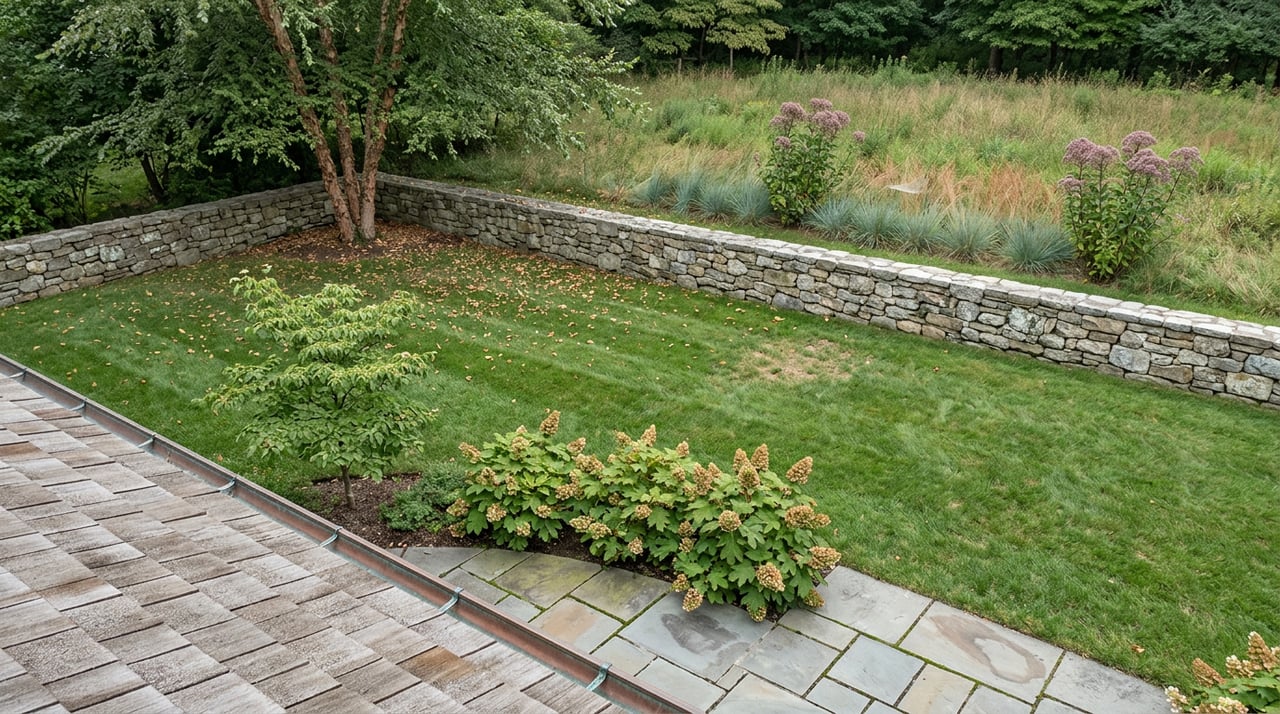
"This is our best fallback position." That is what Cynthia Curtis, speaking for a resident group called Friends of the North 40, told the Boston Globe in December 2014, after Wellesley College agreed to sell the town 46 acres of woods, gardens, and open field off Weston Road for $35 million. Curtis had spent the better part of a year fighting to keep the land out of a private developer's hands. The town buying it felt like a win. It was not, by her own account, the win anyone actually wanted.
Twelve years later, that distinction is about to matter again. On August 17, 2026, the Select Board previewed a plan to gather public input on what happens next on the North 40, and set an Oct. 1 workshop at Hunnewell Elementary School to do it. The town's own facilities master plan has already recommended a spot within the North 40 for a new fire headquarters.
If your mental map of the North 40 is trails, tomato plots, and a boardwalk over a vernal pool, that recommendation might sound like a betrayal of everything the 2014 fight was supposed to settle. It is not. It is exactly what the deal always allowed.
The Fight Everyone Remembers
Wellesley College had owned the land since 1873, when founder Henry Durant folded it into a deed known as the Durant Indenture, restricting its use to farmland, woodlots, and "pleasure grounds" for the benefit of the college. In April 2014, the college petitioned the Massachusetts Supreme Judicial Court to lift those restrictions so it could sell the parcel to a developer. Residents did not find out until April 24, and the Attorney General signed off just eight days later. There was no public hearing.
What followed was a genuine grassroots scramble. A group called Save the North 40 formed that summer, surveyed households in the neighboring Weston and Woodland areas, and pushed the town to bid on the land itself rather than let it go to a private buyer. The college's trustees voted unanimously in December 2014 to accept the town's $35 million offer. A special Town Meeting in January 2015 approved the purchase nearly unanimously, and in March, 80 percent of voters at the town election ratified it at the ballot box. The sale closed that June.
That is the story most residents who lived here in 2014 can still recite. The purchase and sale agreement also set out how the parcel could be used.
What the Agreement Preserved
The purchase and sale agreement between the college and the town did not preserve all 46 acres as open space. It preserved at least half. The rest was explicitly reserved for municipal use, the same category of use that includes a fire station, a school, or playing fields. The agreement also required the town to maintain a community garden of roughly the same footprint that already existed along the Weston Road boundary, for a minimum of three years after closing, and to keep the wooded buffer south of the aqueduct intact to shield the college's campus along Route 135. In practice, that left the town room to consider a range of civic uses for the remaining acreage.
That flexibility is not new to this land. The town itself leased 22 of these acres from 1955 to 1960 to run a sanitary landfill, decades before anyone was fighting to save it as open space. The North 40 has never actually been a static, single-purpose piece of ground. It has been farmland, a dump, a research site, a garden, and a trail network, sometimes more than one of those at once.
Here is a rough timeline of how the parcel has changed hands and purpose:
| Year | What happened |
|---|---|
| 1873 | Henry Durant's indenture folds the land into Wellesley College's campus, restricted to agricultural and educational use |
| 1955–1960 | Town leases 22 acres for a sanitary landfill |
| April 2014 | College petitions the SJC to lift the indenture and sell to a developer |
| December 2014 | Trustees accept the town's $35 million purchase offer |
| March 2015 | Voters approve the purchase, 80 percent in favor |
| August 2019 | Town cuts the ribbon on a boardwalk over the North 40's vernal pool |
| August 2026 | Select Board sets an Oct. 1 public workshop on the parcel's future use |
The Fire Station Nobody Has Voted On Yet
At that same August 17 meeting, the Select Board pushed a request for fire station feasibility study funding from the fall Town Meeting to spring, giving the idea more runway before it goes to voters. Board members are expected to take up the fire station question again at a September meeting. Nothing about a headquarters on Weston Road is decided. It is a recommendation in a master plan, not a funded project, and the timeline the town has set suggests officials know this needs more public airing before it becomes a warrant article.
That caution tracks with how the town has always handled this parcel. Every prior change here, the 2015 purchase, the 2019 boardwalk, has gone through a public vote or a public ribbon-cutting, not a quiet decision behind closed doors. The Oct. 1 workshop looks like the start of that same process for whatever comes next.
What to Expect on October 1
The workshop is not a vote. According to the Select Board's own description, it opens with a history of the 2014 acquisition, then moves into a hands-on session where attendees weigh in on possible future uses of the municipal-use half of the parcel. The town has said it is doing targeted outreach to three specific groups: abutters, community garden members, and Town Meeting members, which suggests officials expect the most informed and most affected input to come from people who already have a direct stake in this ground.
If you fall into one of those categories and have not heard about the meeting through official channels, the town's own North 40 page is the most reliable place to check for updates as the fall progresses.
The Gardens Are the One Thing Not Up for Debate
Whatever happens to the municipal-use half of the parcel, the Weston Road Community Gardens are not part of the conversation. Their roots go back to World War II, when Wellesley College turned over a portion of its Botany Department land, then known as the Weston Road Laboratories, for Victory Gardens that helped ease wartime food shortages. The purchase agreement carried that tradition forward by requiring the garden to continue after the town took ownership.
The gardens have kept growing in ways that go beyond the fine print. In 2016, a $1,000 grant from The Fund For Wellesley let a group of Mandarin-speaking residents cultivate a specific plot, working alongside the Wellesley Village Church, the Wellesley Youth Commission, and the Council on Aging, with produce going to residents at Morton Circle and to the Wellesley Food Pantry. Longtime gardeners like Michael Tobin, who has kept a plot for fifteen years and grows enough garlic to seed next year's crop, have turned informal tips into community workshops. The town is currently accepting names for the waitlist at Weston Road, which tells you the demand for a plot here still outpaces the supply, regardless of what the town decides about the acres around it.
Why This Is Worth Watching Even If You Never Plant a Tomato Here
The North 40 debate is really a preview of a question Wellesley will keep answering for years: how does a town that fought hard to keep a piece of land out of private development hands decide what its own municipal use of that land should look like. The 2015 vote settled who owns the North 40. It never settled what the other 23 acres are for.
The Nov. 9 Special Town Meeting at Wellesley High School will take up whatever warrant articles made the Aug. 21 filing deadline. The fire station funding request will not be one of them. The Select Board has already pushed that vote to spring Town Meeting, which gives the Oct. 1 workshop room to shape the conversation before a specific plan reaches any ballot. If the process holds to its own pattern, whatever comes next on the North 40 will go to a public vote, the same way the last two decisions did.
For residents who walk the trails, hold a garden plot, or live close enough to hear the difference between a siren and a lawnmower, that vote is worth showing up for.
Understanding how a town balances open space commitments against its own growing needs is part of understanding what makes a place like Wellesley function day to day, not just what it costs to live here. If you are weighing a move within Wellesley or trying to make sense of how local land use decisions might shape a neighborhood you are considering, Laura Wurster brings the same close attention to town process that she brings to contracts and closings. Schedule a consultation to talk through what is happening in the town you already call home, or the one you are thinking about calling home next.
This article is general information, not legal, tax or financial advice. Consult a qualified professional about your situation.